Traditional Wedding Ceremony Script: The Ultimate 2026 Guide
Planning a 2026 wedding? Discover the essential components of a traditional wedding ceremony script, from standard order to modern twists and expert tips.

- Traditional ceremonies are trending shorter (20–30 minutes) for 2026.
- Gen Z is revitalizing traditional elements with a modern, egalitarian twist.
- Professional formatting and technical rehearsal are non-negotiable for a smooth ceremony.
While modern weddings often lean into the avant-garde, there is a profound, timeless power in the "classic" approach. A traditional wedding ceremony script acts as the heartbeat of the celebration, providing a familiar and sacred structure that honors the gravity of the commitment being made. As we look toward the 2025 and 2026 wedding seasons, we are seeing a fascinating "traditional pivot." Couples are increasingly seeking a sense of permanence and heritage, using the foundational elements of tradition to anchor their contemporary love stories.
The 8-Part Skeleton: The Anatomy of a Traditional Script
Every traditional ceremony, regardless of how much you choose to personalize it, rests on a foundational skeleton. This structure ensures that the event flows logically and emotionally from the arrival of the couple to their first exit as spouses.
1. The Processional
This is the grand entrance. Traditionally, the Officiant enters first, followed by the Groom and his attendants. Then come the Bridesmaids, the Ring Bearer, and the Flower Girl. Finally, the Bride makes her entrance, often escorted by her father. In 2026, we are seeing more inclusive processionals where both parents walk the couple down the aisle.
2. The Welcome (Gathering Words)
The officiant welcomes the guests and acknowledges why everyone has gathered. This is the moment to set the tone.
Tip
3. The Readings
Usually, one or two readings from literature, scripture, or poetry are shared by close friends or family members. This adds a layer of community involvement to the script. If you are looking for specific inspiration, you might consider looking into Bible Readings for Weddings.
4. The Declaration of Intent
This is the "I Do" part. It is the legal and public acknowledgment that both parties are entering the marriage of their own free will. It is distinct from the vows, which are the promises made between the couple.
5. The Vows
This is the emotional core of the traditional wedding ceremony script. While tradition often dictates a "repeat after me" format, many 2026 couples are opting for a hybrid approach—traditional promises followed by personal additions.
Note
6. The Ring Exchange
The rings are the outward symbol of the inward commitment. The officiant will usually say a few words about the circle having no end, representing eternal love, before the couple places the rings on each other’s fingers.
7. The Pronouncement and The Kiss
The officiant declares the couple officially married. This is followed by the long-awaited "First Kiss."
8. The Recessional
The couple exits first, followed by the wedding party and then the guests. This is the moment of peak joy and celebration.
Modernizing Tradition: The 2026 Twist
Tradition does not mean "outdated." In fact, the most successful ceremonies in 2026 will be those that respect the traditional framework while incorporating modern values and technology.
AI Integration and Script Writing
A growing number of couples are now using AI tools to help draft their scripts or vows. This isn't about replacing human emotion; it’s about overcoming the "blank page" syndrome. Using AI to generate a first draft of a traditional wedding ceremony script allows couples to see the structure clearly before adding their unique voices.
Gender-Neutral and Egalitarian Language
Modern traditionalists are ditching phrases like "obey" and "give the bride away." Instead, "Who gives this woman?" is being replaced with "Who supports this couple?" or "Who brings this woman to be married?" Similarly, many officiants now use "Married Couple," "Life Partners," or "Spouses" instead of "Husband and Wife" to be more inclusive.
The "Unplugged" Script Snippet
In an age of constant connectivity, the "Unplugged" ceremony is now a staple of the modern traditional script. Officiants are now expected to include a gentle reminder at the very beginning:
"The couple asks that you please silence your phones and put away cameras to be fully present in this moment. They have hired professionals to capture the day, and they want to see your faces, not your screens."
Symbolic Add-ons: New Unity Rituals for 2026
To keep the ceremony engaging, many couples are adding symbolic rituals into the middle of their traditional script. Here are the three trending rituals for the upcoming seasons:
| Ritual | Meaning | Materials Needed |
|---|---|---|
| Unity in Glass | Creating a permanent art piece | Colored glass crystals, two pouring vessels |
| Warming the Rings | Community blessing of the bands | The wedding rings, a small pouch |
| Tree Planting | Growth and shared roots | A sapling, soil from two locations, a pot |
Warming the Rings
This is a particularly touching addition to a traditional wedding ceremony script. The officiant announces that the rings will be passed through the guest rows. Each guest is invited to hold the rings for a moment and "whisper a prayer or wish" over them. By the time the rings reach the couple for the exchange, they are literally "warmed" by the love of the entire community.
Unity in Glass
Moving beyond the traditional sand ceremony, "Unity in Glass" involves blending colored glass crystals. After the wedding, these crystals are sent to a glassblower who creates a permanent sculpture, vase, or ornament. It is a modern, sophisticated take on the "two becoming one" symbolism.
Real-World Script Examples
To help you visualize how these elements come together, here are three examples of how to frame different sections of your ceremony.
Example 1: The "Honor and Cherish" Modern Traditional
Officiant: "Do you, [Name], take [Name] to be your wedded spouse, to live together in the holy estate of matrimony? Will you love them, comfort them, honor and cherish them, in sickness and in health; and, forsaking all others, keep you only unto them, so long as you both shall live?" Partner: "I do."
Example 2: The Multi-Generational Heritage Blend
Officiant: "Marriage is not just the joining of two people, but the weaving of two families and two histories. Today, we acknowledge the ancestors of [Partner A] and [Partner B], whose love and resilience paved the way for this moment. As they exchange these rings, they carry the legacy of those who came before them into a new future."
Example 3: The Intimate 360-Degree Circle Script
Officiant: "You may notice we are seated in a circle today. In many traditions, the circle represents the community that surrounds and supports a marriage. There is no 'front' or 'back' here; there is only the center, where [Name] and [Name] stand, and the surrounding embrace of all of you."
Do this
From the OurVows workspace
Shaping your ceremony?
Draft your vows and ceremony, then keep the whole day organized in one place.
The Pro-Checklist: Ensuring a Flawless Delivery
Even the most beautiful traditional wedding ceremony script can be ruined by poor logistics. As a professional coach, I recommend these four technical "must-haves."
- Font Size Matters: Your officiant should print the script in at least 22-point font. They will be glancing down while standing several feet away; small text leads to squinting and lost places.
- The "Step Aside" Rule: Instruct your officiant to step completely out of the frame just before the "First Kiss." This ensures your photographer gets a clean shot of just the two of you without the officiant's head popping up between you.
- The Name Test: To avoid the "wrong name" nightmare (it happens more than you think!), write the couple's names at the top or bottom of every single page of the script.
- Rehearsal is Mandatory: Never read a script for the first time on the wedding day. Read it aloud at least three times to catch awkward phrasing, tongue-twisters, or sections that feel too long.
Heads up
Common Mistakes to Avoid
- The "Standing" Oversight: One of the most common errors is the officiant forgetting to tell guests to sit down after the bride enters. Your script must include the line "You may be seated" in bold, red letters right after the processional ends.
- Rushing the Vows: Nervousness causes speed. Include "PAUSE" cues in brackets throughout the script to remind the couple to breathe and let the words sink in.
- The "Speak Now" Myth: Most modern traditional scripts now omit the "If anyone knows any reason why these two should not be joined..." line. It is unnecessary legally and often invites awkward jokes from the audience.
- Assuming the Officiant Knows the Dynamics: If there are deceased parents to be mentioned or sensitive family dynamics regarding the "giving away" portion, these must be explicitly written into the script. Don't leave it to chance.
Frequently asked questions
What is the standard order of a traditional ceremony?
Who walks down the aisle first in a traditional setting?
Do we have to say "obey" in our vows?
How do we handle an "Unplugged" ceremony?
How long should the ceremony be?
Conclusion
The traditional wedding ceremony script is more than just a sequence of words; it is the map that guides you into your new life together. While the trends of 2026—from "Meadowcore" floral installations to QR code programs—add visual flair, the script provides the substance. By blending the time-tested structure of tradition with your unique love story and modern values, you create a ceremony that feels both grounded and fresh.
Remember, tradition provides the map, but your love story provides the destination. Take the time to refine every word, rehearse every transition, and ensure that your script reflects the beauty of the commitment you are making.
Do this
Ready when you are
Planning your ceremony?
Use our expert tools to build your perfect day.
For more script inspiration, check out our Complete Guide to Wedding Ceremonies or explore Non-Religious Wedding Ceremony Script options.
Ready when you are
Plan your wedding without the chaos.
Free forever for couples just getting started. Two minutes to set up. No credit card.
Keep reading

The Ultimate Handfasting Ceremony Script Guide for 2025–2026
Discover the history, modern trends, and step-by-step handfasting ceremony script options for your wedding. Expert advice from Dr. Julian Kwong.

Beyond the Vows: The Ultimate Guide to Choosing a Wedding Reading from Books
Discover how to choose the perfect wedding reading from books for your 2025–2026 ceremony. Explore trends like BookTok, Regency classics, and modern favorites.
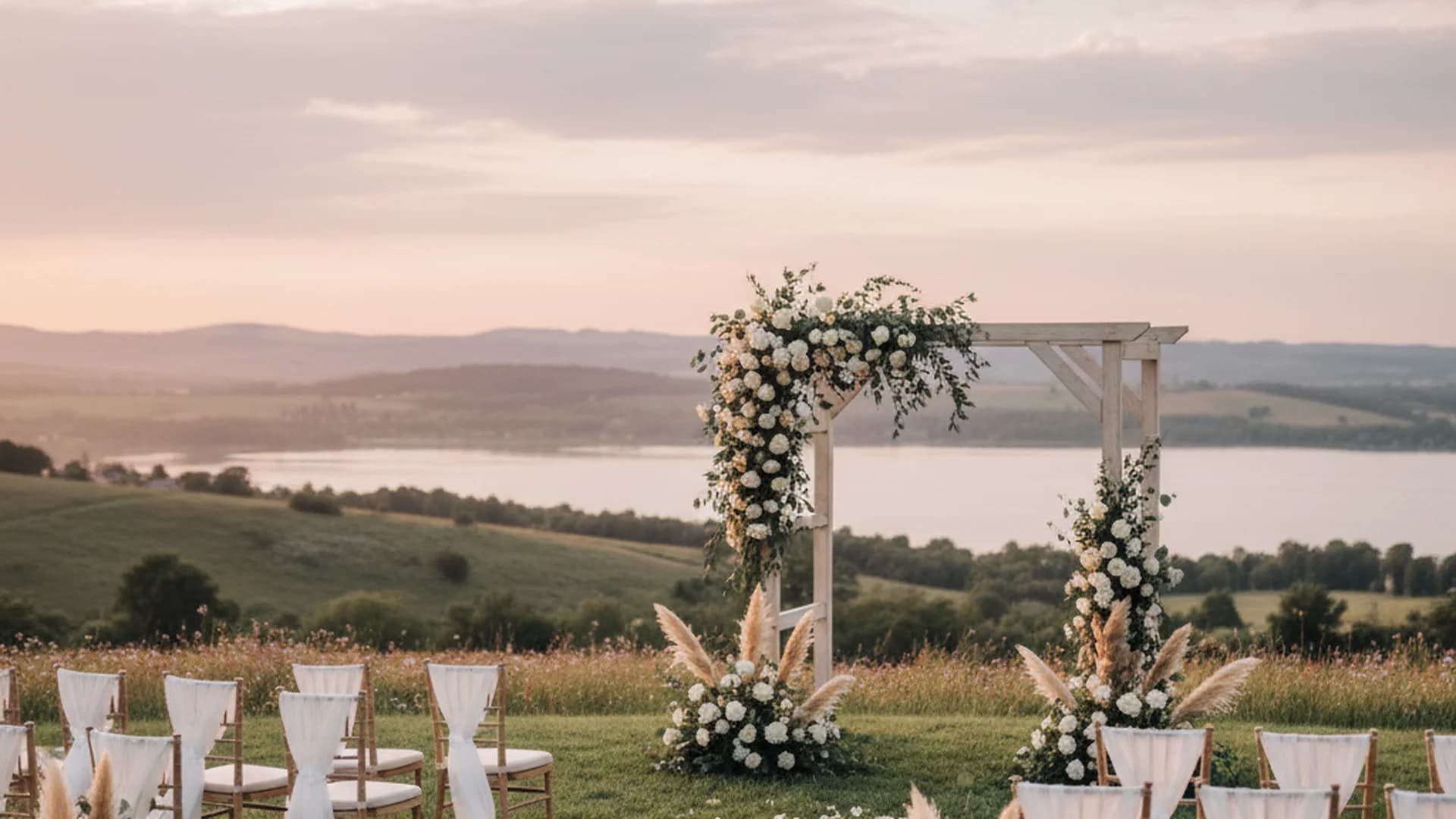
The Ultimate Guide to Outdoor Wedding Ceremony Ideas for 2025-2026
Discover the latest outdoor wedding ceremony ideas, from Meadowcore floral trends to sustainable luxury tips. Plan your perfect open-air celebration today.